

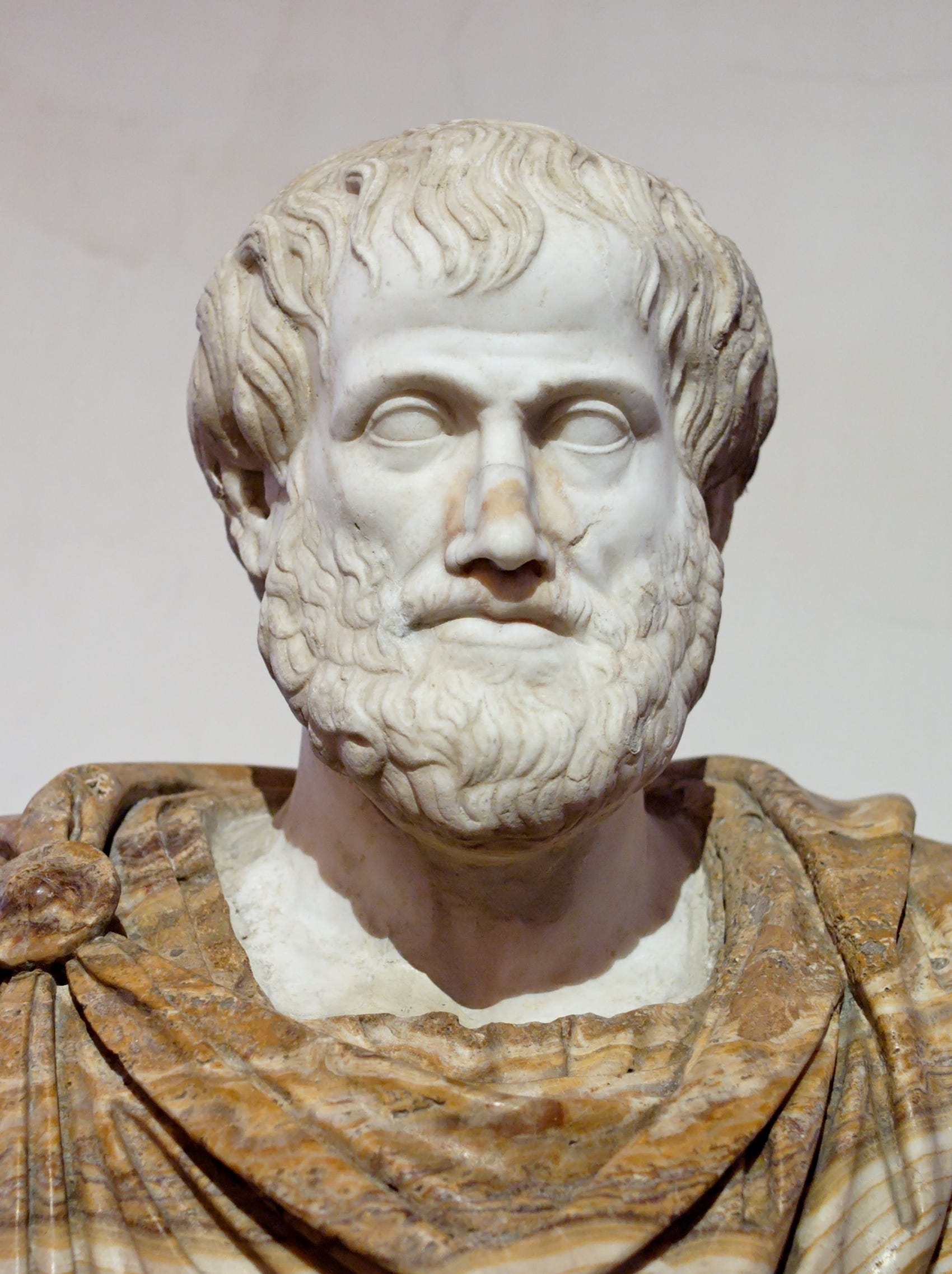
I have been trying to focus my book reviews on young adult fantasy fiction, but periodically, I also review books that help me on my journey in my writing career. This year, instead of going to a conference or taking a class, we got a subscription to MasterClass. MasterClass is a series of online courses by masters in their field, including eleven writers such as Neil Gaiman, James Patterson, Margret Atwood, Dan Brown, and Judy Blume. Over and over again in these classes, I heard the writers refer to this work by Aristotle.
When a famous author mentions a book as helping them in their career, you listen. When

more than one mentions a book, you better go out a get it right away. Luckily, Amazon has a copy of the work for free for Kindle, but next time I read this, I would like one with explanatory notes. This translation is fine, but there as so many places that are still spelled out in Greek. I also had many questions about the context of this work. I will have to continue to research more about it to get everything I can from it, but here is my review based on my first read-through.
Poetics is a short work that covers the basic principles of storytelling in performances of ancient Greek dramas. Aristotle works through a series of topics starting with defining genres of poetics, including tragedy and comedy. Then he proceeds to issues such as the structure of a good story and the way to use language in telling that story. Much of his advice is still very good for today. For example, we were often taught in school a diagram with a beginning, a climax, and a conclusion. To be honest, I have yet to find a useful context for this horrible diagram. I wish schools would stop teaching it. Aristotle instead talks about a story starting with a premise and then experiencing a series of complications until you reach a conclusion, either positive or negative.
Another thing Aristotle talks about is not over-adorning a story with fancy costumes and embellishments. He talks about using common words rather than obscure words no one knows. Much of his advice is very good for today's writer, but not all his advice.
Aristotle is also very sexist and gives advice that only applies to his time in history as well. He mentions things about the Greek language or Greek works that I don't know anything about. As with all books, one should read this with a critical eye, not looking for errors, but weighing what is said for truth. Harvest the nuggets that you can use and leave the rest.
One of the nuggets that I had to ponder over is this: "a probable impossibility is to be preferred to a thing improbable and yet possible."
I find this to be fascinating as a fantasy writer, trying to make my stories ring true. In my experience, Aristotle is right. It is easier for a reader to accept my hero diving off of a cliff and being saved by his friend before certain death than for my readers to believe the same hero was able to just jump over a wide opening between two cliffs. Why is this?
I don't know.
But it is still a good observation.
So, in conclusion, read Aristotle's Poetics. It will give you much to think about.