
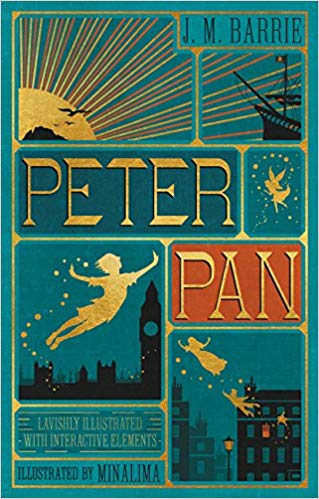
If the only form of Peter Pan you have been exposed to is movies, you may think that this book is about a boy named Peter Pan who never grows up and is a celebration of perpetual childhood. This would be incorrect. The novel Peter Pan by J.M. Barrie is about Wendy, the Darling children, and the lost boys all choosing, on their own… without an adult, to grow up.
This may come as a surprise to my readers. Hardly anything I have read about this book brings their choice to grow up out as the main theme, but it is as clear as it can be.
Peter Pan starts with Mr. Darling wanting Wendy to move out of the nursery and grow up. This wish is contradicted by everyone in the family. We then get introduced to Peter Pan, a sprite-like embodiment of perpetual childhood, both the good and bad. The children are all whisked away on an adventure into the world of childhood play. Peter is fun, intriguing, and exciting, but also forgetful, chaotic, and neglectful. The adventures are exhilarating, but all the children, including the lost boys, long for a mother.
Why?
Mrs. Darling and the image of motherhood portrayed in this novel embodies comfort, safety, stability, and order. Mr. Darling goes from making harsh demands to being over-the-top remorseful, but Mrs. Darling always speaks sense and maintains a quiet vigil for her children. This is an extension of who she is while they are home as well, as we see through Wendy’s imitation of her. The “mother” is the link to adulthood that the children use to pull themselves out of the anarchy of unrestrained play.
If you watch the movie adaptations of this book, adulthood is pictured in the pirates, but this is not the reality of the book. The adults in Neverland are pirates because that world as a whole is the world of childhood, but the mother is, in fact, the real image of adulthood that every child chooses except Peter. Wendy gets tired of Peter’s continual neglect of her. All the children get tired of the continual games. The predictability and stability of adulthood embodied by motherhood lure the children more than the exotic Indians, mermaids, pirates, and play by the end.
So why do I say this book is not about Peter Pan? Because Peter Pan never changes. Wendy is the primary character who changes and develops. She claims to not want to grow up at the beginning of the novel, and yet she continues to try to bring adult sense and order to Peter and Neverland in her role as his mother. The reader often sees a romantic hint in her affection for Peter, but this is a grown-up emotion that Peter cannot understand. Wendy is continually traveling to her final choice to grow up throughout the story, and in the end, makes the choice to do so.
I love this book because is a celebration of the family in our modern world that sees parents as unnecessary. The children continually swing, as real children do, from wanting the security of their parents to wanting the freedom to do as they like and back again to the comfort of their mother’s arms. The story of Peter Pan encourages parents to allow children to enjoy their world of imagination without the worry that they will get “stuck” there. The book also encourages children to value and think about their parents, which is so easy to neglect in childhood. The book is a classic because it surpasses time and culture to the journey and growth that every child experiences as they progress toward maturity.
Peter Pan is often marketed to young children, but I actually recommend this book to teenagers who are wrestling with a world that won’t let them grow up. Our modern culture tries to convince us to be children forever and to see growing up as a sad ending to the most important time of our life. This is the way the Peter Pan movies all end, but the novel is different. In the book, each phase of life is what it is and savored. We are told what the children become as adults, and we are not supposed to mourn their loss of childhood. We are not to celebrate it either. We are only asked to accept it as the way things are. I believe this is something that young adults who are leaving childhood need to hear: It is good to choose to grow up.
Check out my young adult fantasy fiction novels HERE for something optimistic and fun.
If you like this article, consider subscribing to my quarterly newsletter.

What do you think?