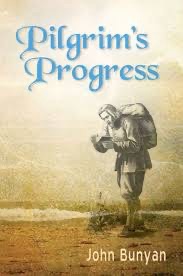
I often post reviews of classic books as part of the list of books I recommend. I had read Pilgrim’s Progress before, but I read it again before doing this review.
Pilgrim’s Progress was written in 1678, and it is an allegory. Many books have been written around this time that were political satire, an allegory that makes fun of a political view, government, or system. Pilgrim’s Progress is a very serious theological work that is trying to enhance the reader’s understanding rather than making fun of a point of view. There have been many Christian allegories since the publication of Pilgrim’s Progress, but none have been as popular or as good.
The story of the novel is not a riveting action adventure and there is no magic or miracles. In many ways, it is more like a traditional fairy tale or folklore in which the protagonist, Christian, goes on a journey and meets beasts, giants, and villains, as well as friends, guides, and helpers. The most fascinating aspect of the novel is the long conversations that explains the allegory. With very accurate and insightful spiritual observations. It is more like a very edifying devotional with some story in between. The story is not extra, though. The story of Christian’s journey perfectly reflects our emotions and state of mind during our own spiritual journey. It also gives us may clues about the vices and temptations that can lead us a way from our path.
I have read many allegories, especially from modern writers, who try to accomplish a similar narrative. Some of these are entertaining with some good insights. The main difference, though, between these other allegories and Pilgrim’s Progress is that Pilgrim’s Progress is extremely dense in the amount of spiritual insight given. More modern allegories will have a theme, such as the love of God or the importance of worship, and the allegory then illustrates this theme in many ways. I have also seem fantasy stories in which the story has an unexplained allegory. These often have one or two specific connections with Christianity such as the sovereignty of God or Jesus’s salvation plan. There are many Christian fantasy fiction novels today who do this, and there is nothing wrong with that. C.S. Lewis illustrates the divine salvation plan in The Lion, Witch, and the Wardrobe, but C. S. Lewis does not call this an allegory. Instead, he wrote The Pilgrim’s Regress, which is one of the few successful allegories out there after Pilgrim’s Progress.
So what makes Pilgrim’s Progress stand out? Many Christian novels focus on a non-Christian believing on Christ. Pilgrim’s Progress does this at the beginning, but the vast majority of the novel is about how to stay on the Christian walk your entire life. It isn’t a seeker-oriented Christian walk either. Christian is not obsessed with converting everyone on his was as though that was all Christians do. Instead, he is focused on his own journey and encouraging those around him an the way. This is extremely important because we often hear about ministers and Christian leaders loosing their way. Our first responsibility is to stay on the path. When it comes to living an entire lifetime as a Christian, I cannot think of any work of fiction that is so powerful and relevant.
I read this book as a child and I feel that it must have been abridged. I really don’t recommend that. I think they are also some movies based on the novel, but I haven’t seen those. What I do recommend is this whole novel for middle school and up. Young readers and those new to Christianity would benefit from reading this with a more experienced adult. This book can be read over and over again with continual new insights.
There is a second part to Pilgrim’s Progress that very few people read. I highly recommend it! While in the first book, Christian leaves his wife and children for his spiritual journey, in the second book, his wife, Christiana, and his children make the journey themselves. This too was written by John Bunyan. It’s surprising how difficult it is to find when most people who have read it like it as much as part 1. It worth the effort to get both parts.
If you like this article, consider subscribing to my quarterly newsletter.

What do you think?