
Pippi Longstocking is a classic children’s book written in 1944. There are two sequels that I haven’t read. The novel was originally written in Swedish, but I read an English translation. The movies have elements of the books but create a story arc that isn’t in the book.
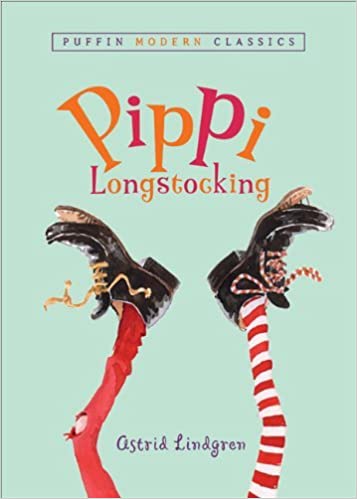
The novel follows a nine-year-old girl, Pippi, as she moves into her home at Villa Villekulla after her father was lost at sea. She is red-hair, super-naturally strong, and tends to tell tall tales about her life at sea. She makes friends with the neighbor kids, Tommy and Annika, and has lots of wacky adventures with her horse and monkey.
The book doesn’t really have an overarching plot. Instead, it is more like a collection of short stories that happen in chronological order. Each chapter is a single adventure with its own problem and conclusion. The adventures are not overly fantastic (things like going to school or the circus), but Pippi’s interactions with these relatable situations are over-the-top extraordinary.
The stories are silly and fun without any moral lessons. In fact, Pippi is not really a good role model at all. She is reckless, rude, and a liar. Yet, she is also loyal, generous, and sensitive. What I like about the books is actually the complexity of the main characters. Pippi is not flat and allows the reader to wrestle with both the negative and positive in one person. Pippi is also both clever and ignorant in many ways.
Pippi is very much like a Peter Pan-style of character in the fact that she is unable to adapt to the adult world. She has created an imaginary narrative and way of living that defies the convention of society. She is the personification of childhood unchecked by education, rules of behavior, or worries of danger. Unlike Peter Pan, she is continually interacting with adults and causing them unintentional frustration. Because of her supernatural strength and odd collection of abilities, she is able to take risks that would be life-threatening to other children (such as head-butting a charging bull).
I do recommend this book for late elementary school children. For children who are on the autistic spectrum, it might be necessary to continually point out the fact that many of the things Pippi does is not safe. Still, I think the majority of children will intuitively understand that Pippi is an imaginary character doing unnatural things. With that in mind, it is a fun book that can help children see why telling the truth and following the rules of etiquette make life better for them, but a little bit of whimsy doesn’t hurt either!
Check out my young adult fantasy fiction novels HERE for something optimistic and fun.
If you like this article, consider subscribing to my quarterly newsletter


Leave a reply to Lara Lee Cancel reply